Broom finish
$4k–$10k
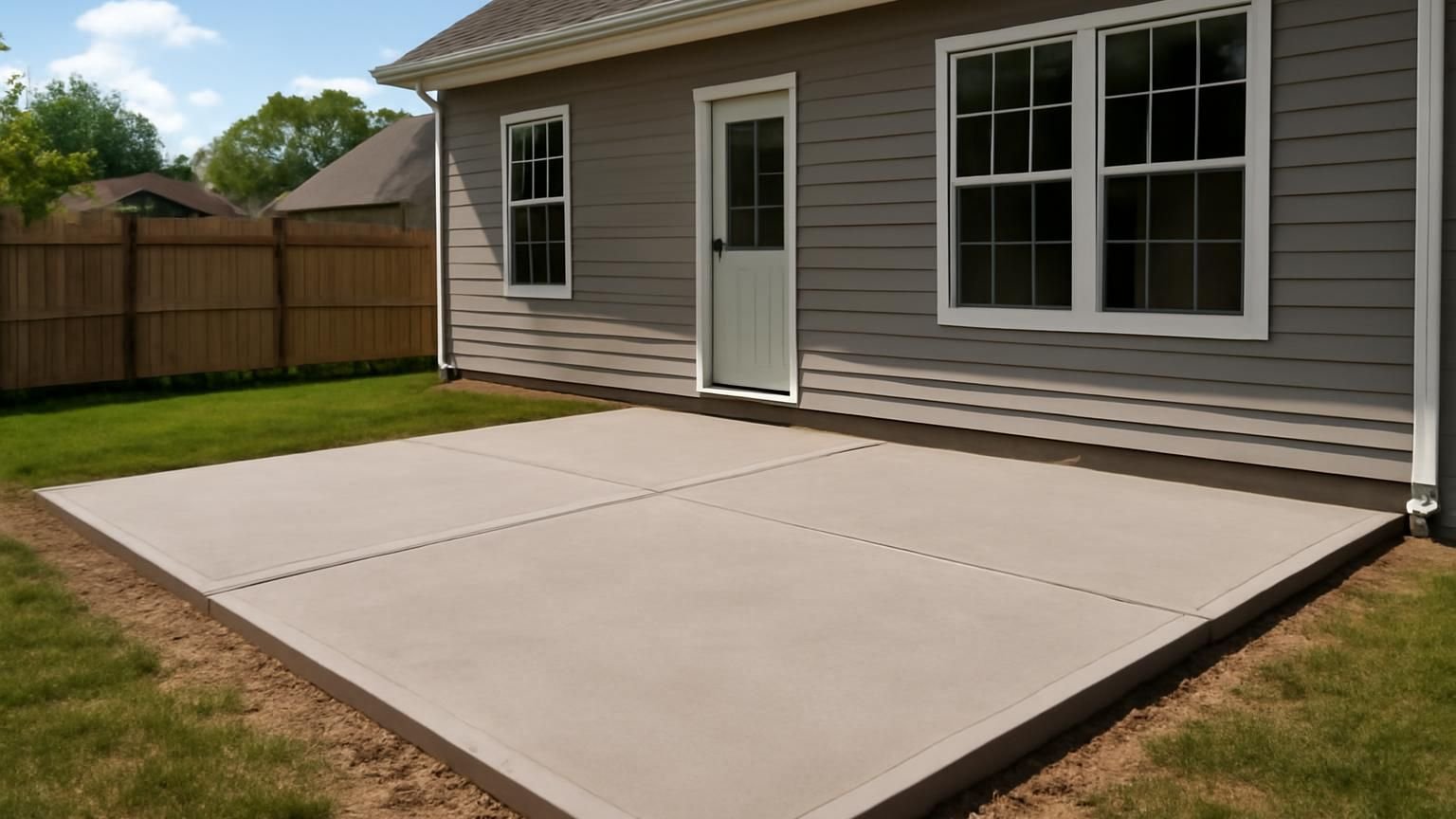
- Old slab or sod removed
- 4 to 6 inches of compacted gravel
- 4-inch slab, 3,500 psi mix
- Wire mesh or rebar grid
- Control joints every 8 to 10 feet
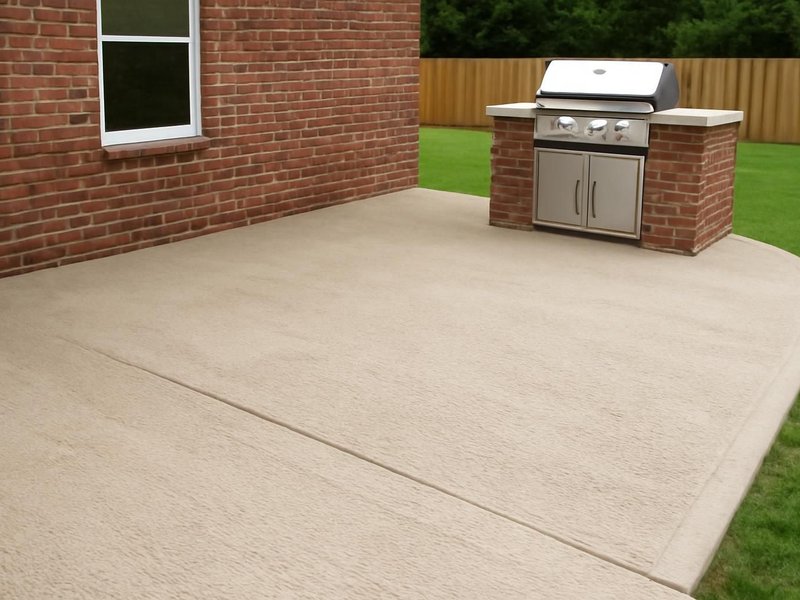
- Broom texture and curing compound
Concrete patio installation · Licensed & insured · Local concrete crews
A concrete supervisor measures the patio, checks the slope away from your house and sends three written prices within 24 hours: a broom finish, a stamped and colored finish, or a bigger patio with steps or a seat wall. Each price lists the slab thickness, the reinforcement and the base depth.
Text a photo of the spot where the patio will go. A concrete supervisor answers within 5 minutes on business days, not a dispatcher.
What happens after you text us
A first exchange usually runs like this. You describe the space, the supervisor asks which way the yard drains, and you leave the thread with a measuring visit and an estimate day on the calendar.
Hi, we want to replace our cracked back patio, roughly 14 by 20, and we like the stamped look that resembles slate.
Hi Mark, Tom here, I run the concrete crews at ProBuild Remodeling. Stamped slate works well at that size. Is the old slab sinking toward the house or away from it? A photo from one corner would help.
Photo sent. It tips toward the back door a bit and water puddles there after rain.
That tells me the base settled. We would break it out, rebuild the base and slope the new slab a quarter inch per foot away from the door. I can measure Wednesday at 5 and send prices Thursday. Good?
Wednesday is good. Can we pick the color then?
Yes, I will bring color and stamp samples so you can hold them up against your siding.
What a concrete patio costs
A broom-finished slab has the lowest cost per square foot and the best grip when wet. Stamped and colored concrete adds handwork and sealer. Steps, walls and larger shapes add forms and pours. Most homeowners choose the stamped tier.
Broom finish
$4k–$10k
Stamped and colored
$10k–$22k
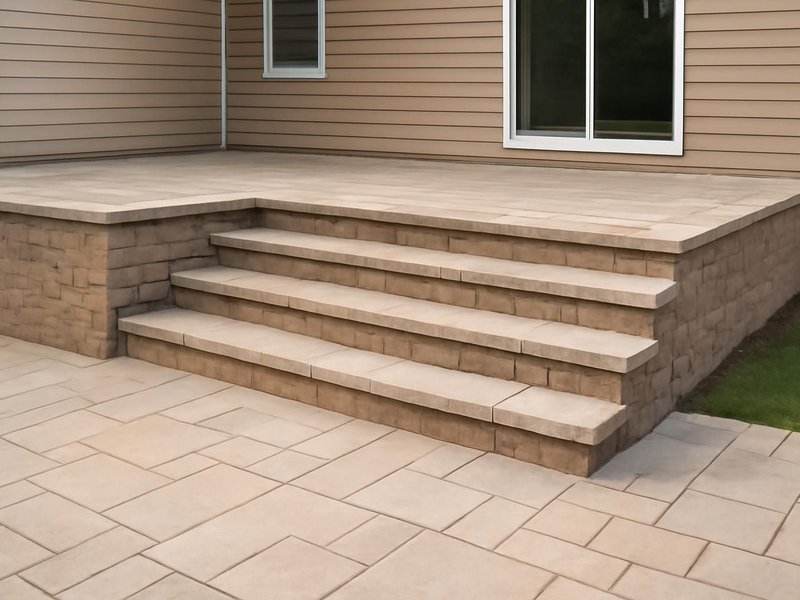
Patio with steps or walls
$22k–$45k
Pick the finish, the patio size and what the site is like. The range updates as you choose, built from the per-square-foot numbers our concrete supervisors use on site.
A range, not a quote. Your written estimate comes after the visit and does not change once you approve it.
Typical range for your answers
Turn this range into a written patio priceWhere the money goes
Averages from our recent stamped patios. Ready-mix concrete is only about a fifth of the price. The rest is the base, the forms, the crew that stamps before the slab sets and the sealer that protects the color.
Get my itemized patio price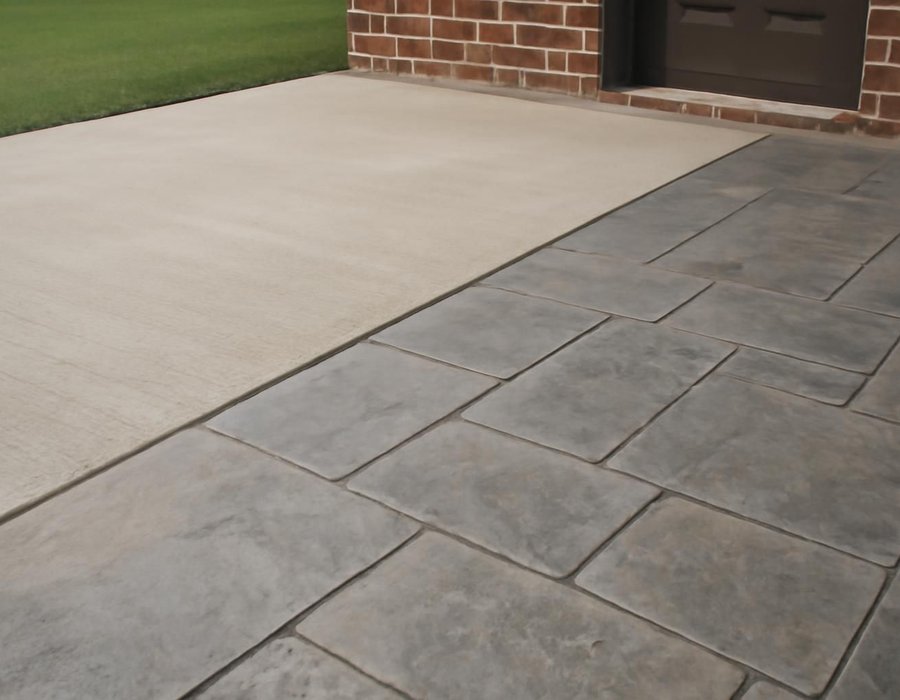
Broom finish or stamped
Both finishes sit on the same slab. Stamped concrete costs roughly 40 to 60 percent more and needs resealing, while broom finish costs less and grips better when wet. At the visit we weigh six things and recommend one for your patio.
| If this is true | We recommend |
|---|---|
| The patio sits by a pool or stays damp in the shade | Broom finish |
| It is the main view from your kitchen or living room | Stamped |
| Your budget is under $10,000 | Broom finish |
| You want it to echo stone or brick on the house | Stamped |
| You would rather never reseal the surface | Broom finish |
| You are replacing old pavers and liked that look | Stamped |
How long it takes
A broom-finish patio takes three to five working days. Concrete reaches most of its strength in 7 days and full strength in about 28, so the schedule tells you when to walk on it, when to add furniture and when to roll a grill out.

Before day one
Patio measured, slope set away from the house, finish and color chosen, 811 called to mark the utilities.
Days one and two
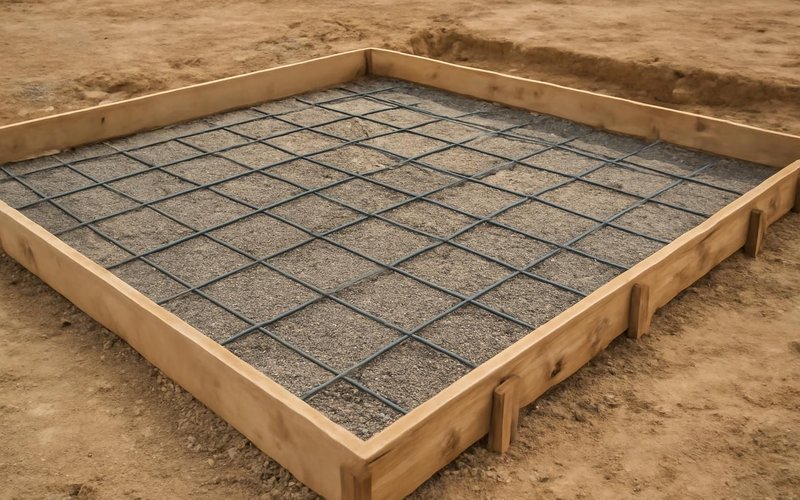
Old slab or sod removed, gravel compacted in lifts, wood forms set to slope, mesh or rebar placed.
Pour day
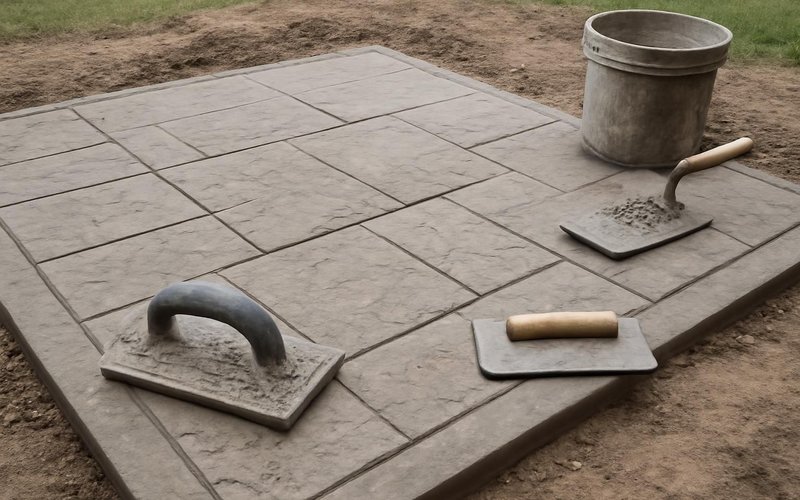
Concrete placed, leveled and floated, then stamped or broomed at the right moment and left to cure.
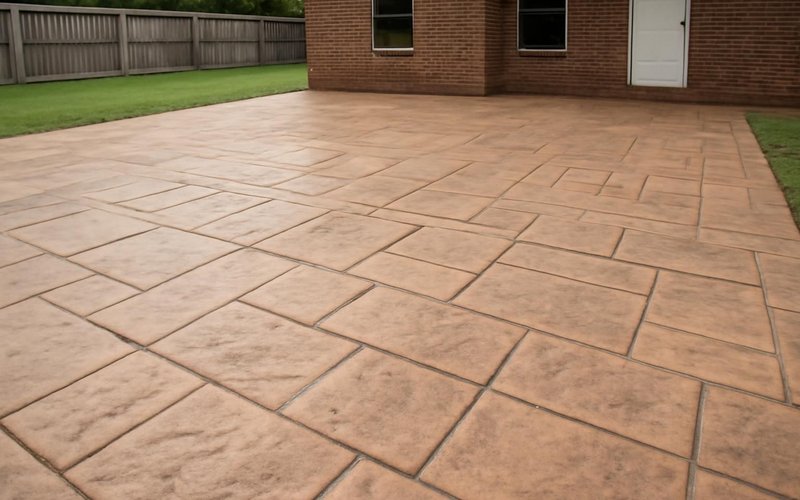
After the pour
Control joints saw-cut within a day, sealer applied, forms pulled and the lawn edge restored.
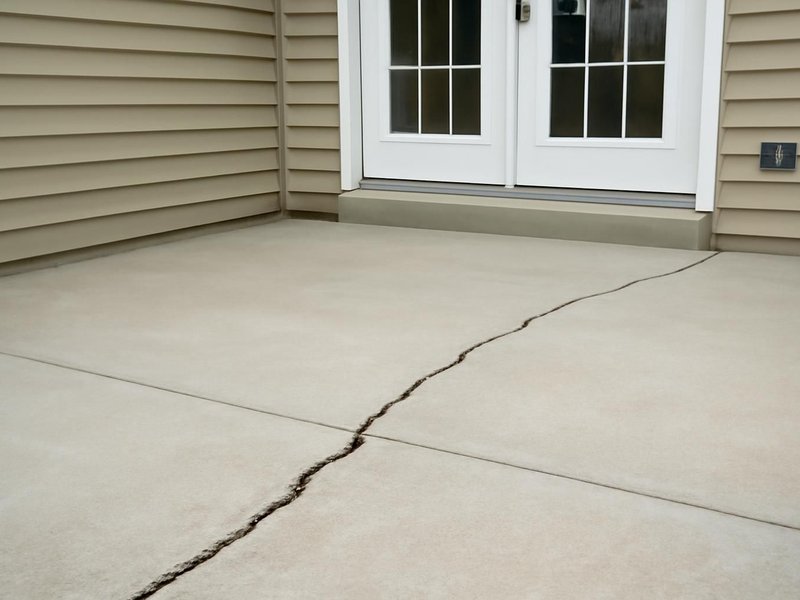
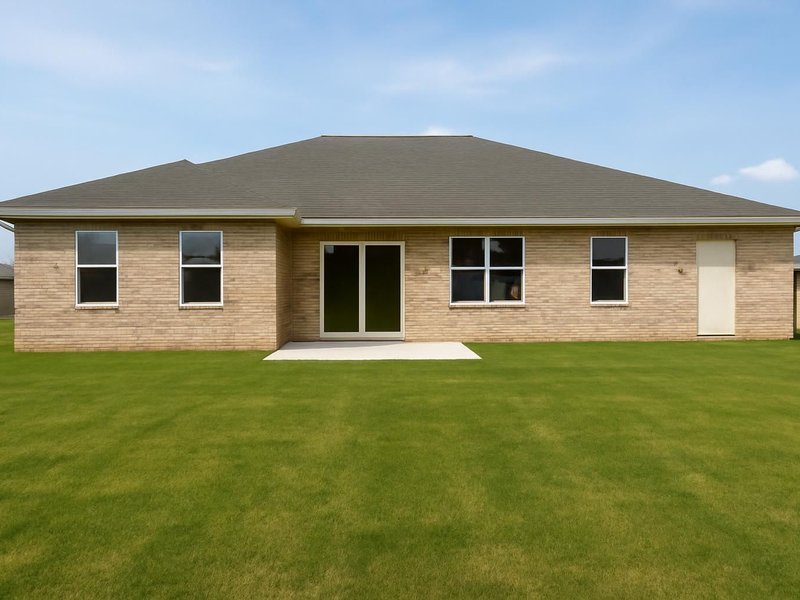
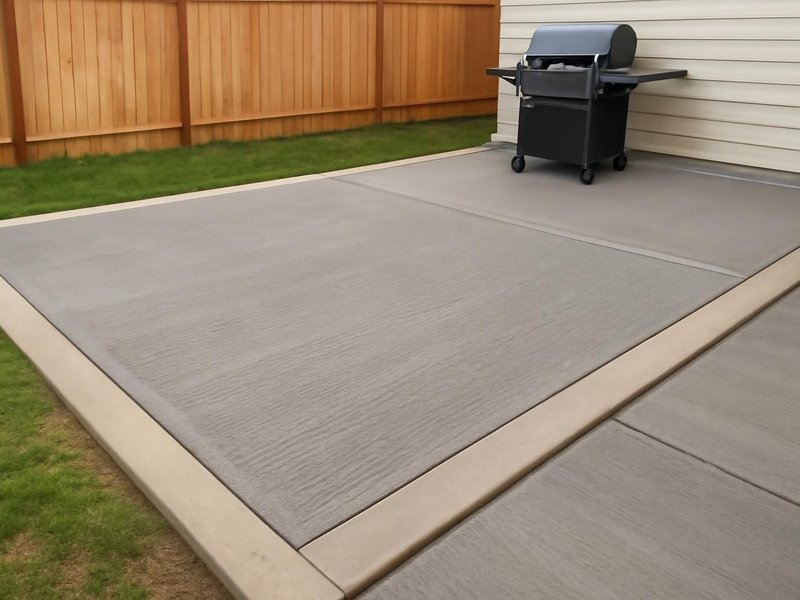
Remodeling concepts
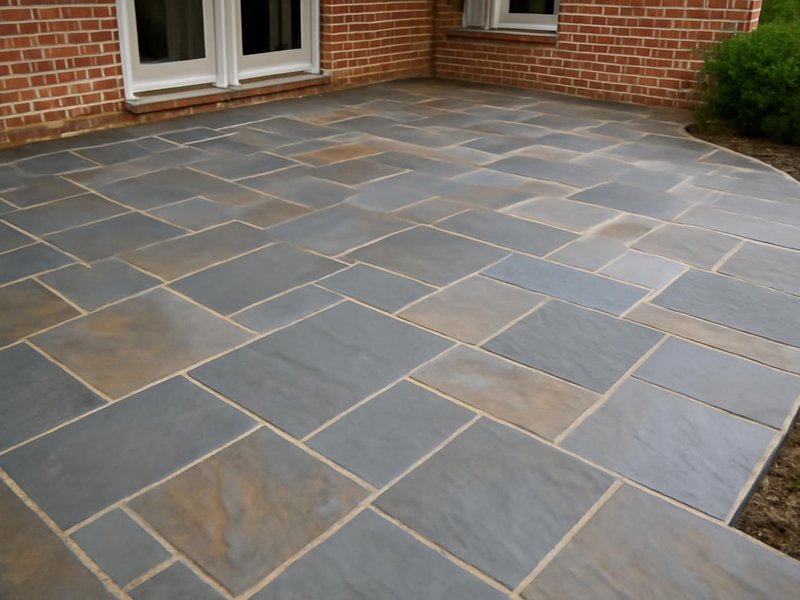
AI-generated examples of existing conditions and remodeling possibilities. Each image is a separate concept, not a documented transformation of the same home.


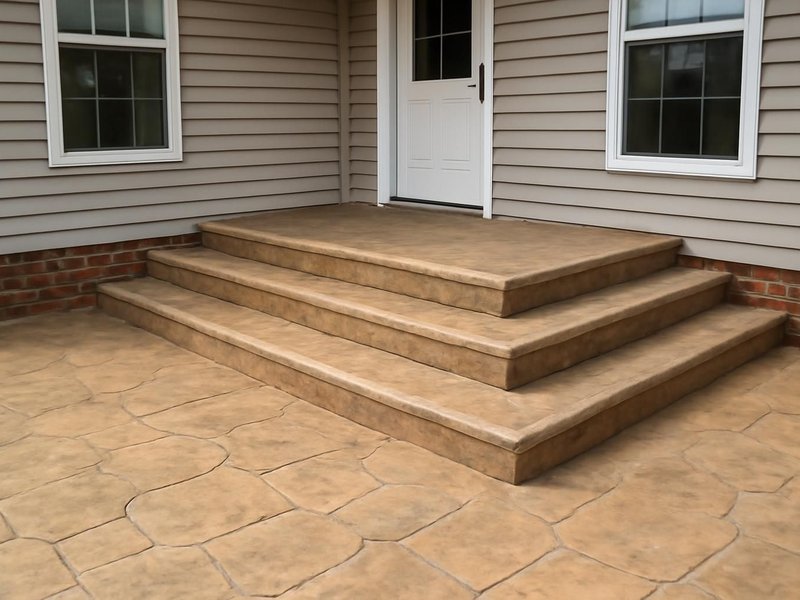
What your patio is made of
Two concrete patios can look identical the day they are poured. The mix, the base, the reinforcement and the sealer decide which one is still flat after a few winters, so your estimate names each one.

Ready-mix rated for strength, with air entrainment in freeze climates so the surface does not flake after years of salt and ice.
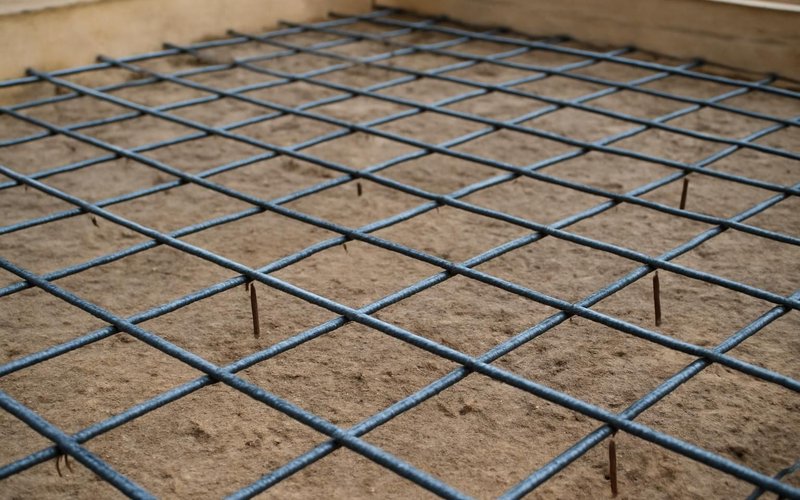
Steel rebar at 18 to 24 inches or welded wire mesh held mid-slab on chairs, so cracks stay tight instead of opening and shifting.
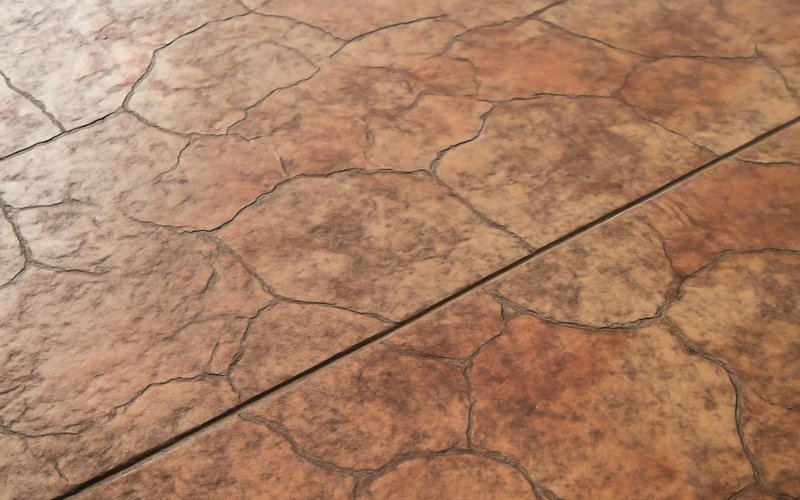
Pigment mixed through the concrete from brands like Davis Colors, plus a release powder that leaves a second tone in the texture.
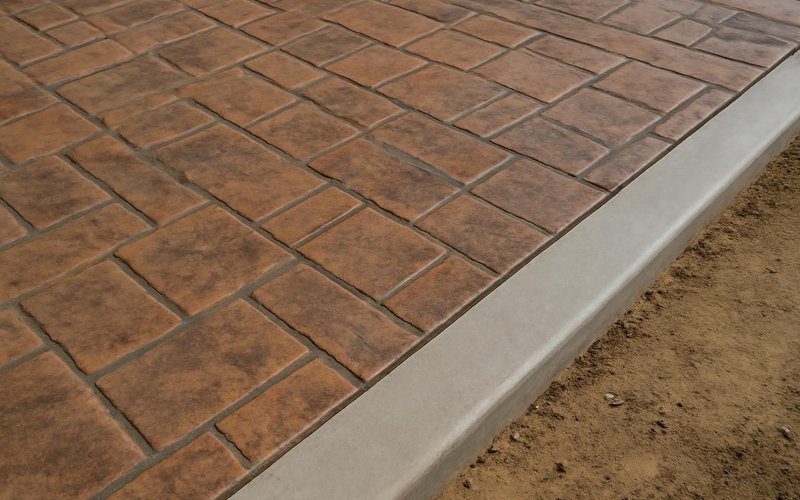
Ashlar slate, cobblestone, wood plank and flagstone mats pressed into the slab, with a hand-tooled border that frames the edge.
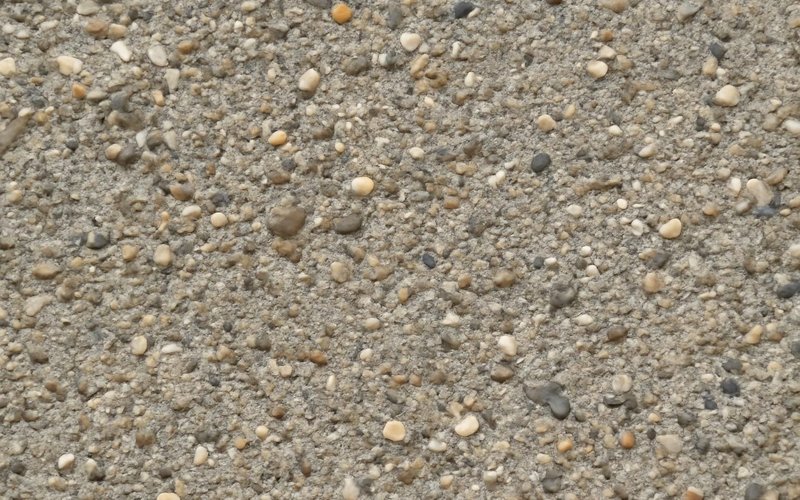
The top layer of paste is washed off to reveal the stones inside. Grippy, hides dirt well and needs less resealing than stamped work.
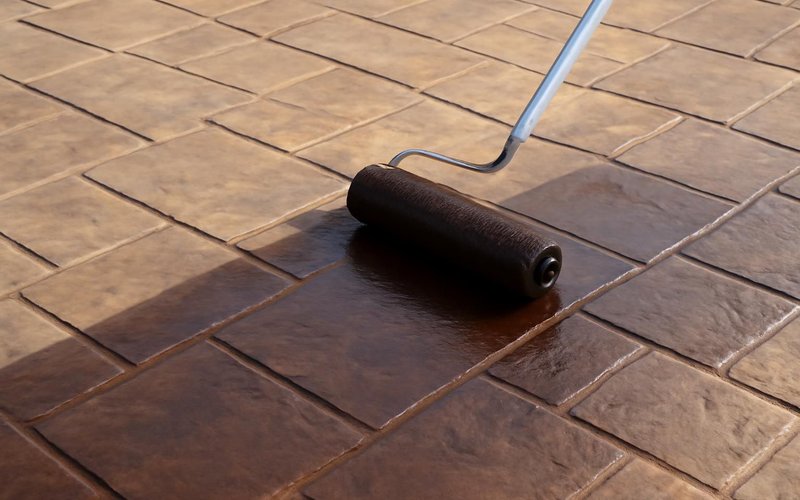
Acrylic sealers such as SuperSeal protect stamped color, and penetrating silane sealers guard broom finishes against road salt.
Written into every contract
The approved price is the final price. Change orders only with your written approval.
A credit for every working day of delay we cause. Weather and inspections excepted, in writing.
Dust barriers, floor protection and a clean-up before we leave. Your home stays livable.
A text or email every working day with photos and tomorrow's plan, or the day is free.
Workmanship warranty in writing, transferable to the next owner, backed by a fixed address.
A small deposit, then you pay only for work that is already completed, inspected and photographed.
Who pours your patio
Concrete gives you one chance to get it right, so the finishers who set your forms are the same ones who pour and stamp. Each is background-checked and introduced by name.

Sets the slope and forms, checks the mix and times the pour.

Floats, edges and stamps the slab while it is still workable.

Compacts the gravel, builds the forms, saw-cuts the joints.
Illustrative project scopes
Planning examples with illustrative budgets and durations. These are not completed customer jobs, invoices or promises about your project.
Your yard is not average
Every concrete patio estimate starts from the three tiers, then changes for access, soil, climate and what you plan to put on the slab. Pick the one closest to your yard.
Ice melt and freeze cycles flake the top of weak concrete. In cold areas we pour air-entrained 4,000 psi concrete, ask you to skip salt the first winter and seal the surface before the first hard frost.
Price a freeze-ready concrete patioConcrete poured in high heat sets too fast and cracks. We pour early in the morning, use a set retarder when needed and keep the slab damp while it cures. Lighter colors also stay cooler under bare feet.
Price a patio for a hot climateA broom finish or exposed aggregate gives paws and small feet grip, and rounded edges hurt less. We slope it toward a drain so a hose clears it, and keep sealers that turn slick when wet off the main path.
Price a family-friendly patioA filled hot tub can weigh over 5,000 pounds. We thicken the slab to 6 inches with rebar where it sits, and set conduit and gas sleeves before the pour so nothing has to be cut into the new concrete later.
Price a patio for a hot tubUnder 150 square feet, setup and truck minimums take a bigger share of the cost. Pairing the patio with a walkway or steps in the same pour usually brings the price per square foot back down to normal.
Price my small concrete patioA broom finish with a single stamped border band gives much of the look for far less. Simple rectangles pour faster than curves. We show each upgrade as its own line so you can drop any of them without a redesign.
Price a budget concrete patioWhere the yard stays wet, a slab alone traps water beside it. We raise the base, add a trench drain or a French drain along the edge, and slope the patio toward the lowest point that can safely take the water.
Price a patio for a wet yardLots around brand new houses are filled and loose. We compact deeper, bring in more gravel or wait for the fill to settle, so the new patio does not sink as the ground around the foundation keeps settling.
Price a patio for a new houseWhat this service is
Concrete patio installation is the pouring of a reinforced concrete slab, usually 4 inches thick on a compacted gravel base, to create an outdoor living surface next to a house. It includes excavation, forms, reinforcement, the pour, the finish and control joints. ProBuild Remodeling installs it with licensed local concrete crews.
The service covers removing an old slab or sod, the gravel base, steel reinforcement, broom, stamped, colored or exposed aggregate finishes, poured steps and landings, and sealing. It does not cover driveways, which need a thicker slab for vehicles, paver or flagstone patios, which have their own page, or the furniture, pergola or roof above.
It is for homeowners who want a durable, low-upkeep patio at a lower price per square foot than pavers, including a stamped look for less. It is not for patios that must come apart later for utility access, or for a surface that has to be finished in one weekend with no curing time.
Questions about concrete patios
A broom-finished concrete patio usually costs $12 to $18 per square foot installed, including the gravel base and reinforcement. Stamped and colored concrete runs $18 to $30 per square foot. Tearing out an old slab adds about $3 to $6 per square foot.
Most patios take three to seven working days: one or two to dig and set forms, one to pour and finish, and one to saw-cut and seal. You can walk on it after a day or two, add furniture after about a week, and it reaches full strength in about 28 days.
Usually, by about 20 to 30 percent up front. Stamped concrete needs resealing every 2 to 3 years, and a crack cannot be lifted out. Pavers cost more to install, but a stained or cracked paver can be swapped. The better pick depends on budget and upkeep.
All concrete shrinks as it cures, so some cracking is normal. Control joints make it crack in straight lines where planned, and a compacted base, steel reinforcement and proper curing keep those cracks tight. Random wide cracks usually point to a weak base.
Four inches is standard for a patio with foot traffic and furniture. Areas holding a hot tub, an outdoor kitchen or a small vehicle should be 5 to 6 inches thick with rebar. The gravel base underneath should be 4 to 6 inches, compacted.
Only rarely. An overlay can work when the old slab is flat, sound and not sinking, but it raises the height and copies any cracks beneath it. Most old patios that are cracked or settling are broken out and replaced on a new base.
Every 2 to 3 years in most climates, sooner where it gets full sun or heavy snow. Resealing keeps the color from fading and blocks water and salt. It takes about a day, and the first sealing is included in the installation price.
A ground-level patio often does not need a building permit, but many towns cap how much of a lot can be paved and require one for steps, raised patios or anything attached to the house. We check the local rules as part of the estimate.
Concrete patios near you
Patios are poured by local crews who know the frost depth and the ready-mix plants near you, under the license of the state where the house sits.
Free concrete patio estimate
A concrete supervisor reads what you sent, texts back within 5 minutes on business days and books the measuring visit in the same thread.
Images marked as AI concepts illustrate remodeling ideas, materials and conditions. They are not photographs of completed ProBuild projects or verified before-and-after pairs.